
First off, you will need to confirm if your guitar needs staggered post tuners. Most guitars made in the Fender style are non-tilt back and can benefit from staggered post tuning machines (ie Telecaster, Strat etc...). However, if your guitar has a tilt back headstock, then you won't likely see a benefit from staggered post tuners.
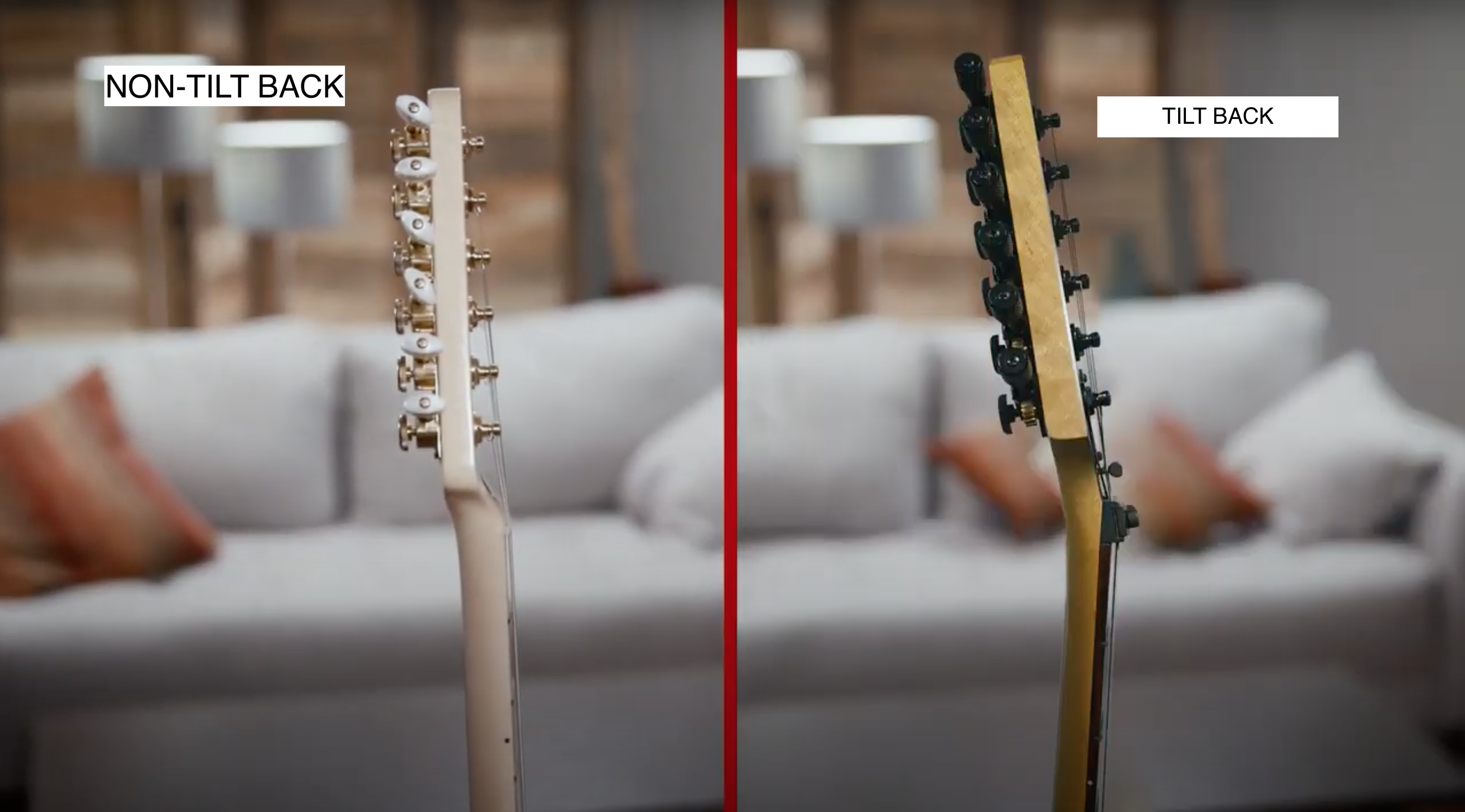
If you are still reading, you must have a non-tilt back headstock. You will now want to determine which staggered post configuration you need.
- Right handed 6 inline guitars: (ie, Telecaster, Stratocaster etc...), we recommend our default stagger configuration. This is given when you select BASS SIDE STAGGERED POST in the "Guitar Style" drop down of our Tuner Upgrade Kit Page. When you order this set, you will get the following:
- (2) 19mm (short)- for the high e and B strings
- (2) 20mm (medium)- for the D and G strings
- (2) 21mm (tall)- for the A and low E strings.
- Left Handed 6 inline guitars: You will want to order TREBLE SIDE STAGGERED POST on the "Guitar Style" drop down. The string order will be the same as a right handed guitar since the treble side is just a mirror image of the bass side.
- Reverse headstock: you will want to order the opposite orientation of your guitar's handedness. (For right handed - reverse headstock, you will want TREBLE SIDE and for left handed reverse you will want BASS SIDE). Since the stringing is reversed on this type of headstock, you will want to follow this configuration:
- (2) 19mm (short) - for the Low E and A strings
- (2) 20mm (medium) - for the D and G strings
- (2) 21mm (tall) - for the B and high e strings
- 7 string: Most extended range guitars have tilt back headstocks. If yours doesn't, you will need to order the tuning machines individually and manually select your stagger. In most circumstances, you will be best served by the following:
- (3) 19mm (short) - put these the farthest away from the nut on the high e, b and G strings. (or Low B, E and A strings on a reverse headstock)
- (2) 20mm (medium)- put these in the middle. (A and D strings of a traditional headstock or D and G of a reverse)
- (2) 21mm (tall)- these would go closest to the nut. B and E of a traditional headstock, or high b and e of a reverse